
If links on your MacBook keep opening in Safari when you’d rather use Chrome, Firefox, Microsoft Edge, or another browser, changing the default browser takes only a few clicks. The exact steps depend on your version of macOS, but the setting is built into the system and doesn’t require any additional software.
Changing the default browser affects how your Mac opens web links from apps like Mail, Messages, Notes, Slack, and many third-party applications. Once you select a different browser as the default, most links you click anywhere on your Mac will automatically open in that browser instead of Safari.
This guide explains how to change the default browser on a MacBook, what happens after you switch, why the option sometimes doesn’t work, and how to fix common problems if macOS keeps reverting to Safari.
What Is the Default Browser on a Mac?
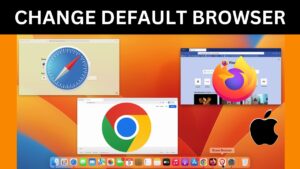
A default browser is the web browser macOS automatically uses whenever you open a web link.
For example, clicking a link in:
- Messages
- Calendar
- Notes
- Microsoft Word
- Slack
- Discord
will launch the default browser instead of asking which browser to use each time.
On a new MacBook, Safari is the default browser. However, macOS allows you to choose any installed browser that supports being set as the default.
Popular alternatives include:
- Google Chrome
- Mozilla Firefox
- Microsoft Edge
- Brave
- Opera
- Arc Browser
- Vivaldi
You can switch between them whenever you like.
Before You Change the Default Browser
Before changing the setting, make sure:
- The browser is already installed.
- The browser has been opened at least once.
- You’re using an administrator account or an account allowed to change system settings.
If the browser doesn’t appear in the list of available browsers, opening it once usually allows macOS to recognize it.
How to Change the Default Browser on macOS Ventura, Sonoma, and Newer
The process is almost identical across modern versions of macOS.
- Click the Apple menu.
- Select System Settings.
- Choose Desktop & Dock from the sidebar.
- Scroll until you find Default web browser.
- Click the drop-down menu.
- Select your preferred browser.
- Close System Settings.
The change takes effect immediately. You do not need to restart your MacBook.
The next time you open a web link from another application, it should launch in your selected browser.
How to Change the Default Browser on macOS Monterey and Earlier
Older versions of macOS use System Preferences instead of System Settings.
Follow these steps:
- Open the Apple menu.
- Click System Preferences.
- Select General.
- Find Default web browser.
- Click the menu.
- Choose your preferred browser.
The browser becomes your default immediately after you select it.
Although the interface looks different from newer macOS versions, the setting works the same way.
How to Change the Default Browser Directly From the Browser
Many browsers can ask to become your default the first time you launch them.
If you dismissed the prompt earlier, you can usually change it from the browser’s settings.
Google Chrome
- Open Chrome.
- Click the three-dot menu.
- Select Settings.
- Choose Default browser.
- Click Make default.
macOS may redirect you to System Settings to confirm the change.
Mozilla Firefox
- Open Firefox.
- Open Settings.
- Scroll to the Startup section.
- Click Make Default.
Microsoft Edge
- Open Edge.
- Open Settings.
- Navigate to Default browser.
- Click Make Default.
Brave
Brave includes the same option under its Settings page. Clicking Make Default either changes the setting directly or opens macOS settings, depending on your macOS version.
Why macOS Opens Safari Even After Changing the Default Browser
Some users notice that Safari still opens in certain situations even after selecting another browser.
This doesn’t always mean the default browser setting failed.
Several situations can produce this behavior.
Safari Is Required for Certain Apple Features
A few Apple services use Safari regardless of your default browser.
Examples include:
- Some authentication pages
- Certain App Store links
- Apple support resources
- Specific iCloud-related features
These are exceptions built into macOS rather than problems with your browser settings.
The Link Is Opened Inside an App
Some applications use their own built-in browser instead of the system default.
Examples include:
- Some messaging apps
- Certain productivity tools
- Applications with embedded web views
In these cases, the website opens inside the app rather than launching your preferred browser.
The Browser Was Removed
If your default browser is deleted or becomes unavailable after an update, macOS typically falls back to Safari automatically.
Reinstall the browser if necessary, then select it again as the default.
What Happens After You Change the Default Browser?
Changing the default browser affects only how links open.
It does not:
- delete Safari
- remove your bookmarks
- uninstall any browser
- move saved passwords automatically
- transfer browser history automatically
Each browser keeps its own data unless you choose to import information during setup.
Many browsers offer an import tool that copies:
- bookmarks
- browsing history
- passwords
- cookies
- autofill information
This makes switching much easier if you’re moving away from Safari permanently.
How to Verify That the Change Worked
The easiest test is to open a link outside your browser.
For example:
- Open Notes.
- Type a website address.
- Turn it into a clickable link.
- Click the link.
If it opens in your selected browser, the default browser has been changed successfully.
You can also click links in:
- Messages
- Calendar
- Reminder notifications
These should all launch the same browser.
What to Do If You Can’t Change the Default Browser
Occasionally, the setting refuses to change or switches back unexpectedly.
Several issues can cause this.
Restart Your MacBook
A simple restart refreshes system services responsible for handling default applications.
While this isn’t usually necessary, it often resolves temporary glitches.
Update the Browser
An outdated browser may not properly register itself with macOS.
Open your browser and install the latest available update.
Then try changing the default browser again.
Update macOS
Older versions of macOS occasionally contain bugs affecting default applications.
Install available macOS updates, then retry the process.
Open the Browser Once
If you’ve just installed a browser but never launched it, macOS may not display it as an option.
Open the browser, complete any first-run setup, close it, then return to System Settings.
Reinstall the Browser
If the browser still doesn’t appear:
- Uninstall the browser.
- Download a fresh installer from the browser’s official website.
- Reinstall it.
- Open it once.
- Set it as the default again.
This rebuilds the browser’s registration with macOS.
Why the Browser Doesn’t Appear in the List
macOS only lists browsers that properly register themselves with the operating system.
If your preferred browser isn’t listed, possible causes include:
- incomplete installation
- corrupted application files
- unsupported browser version
- browser never launched after installation
Updating or reinstalling the browser usually resolves the issue.
Can You Switch Back to Safari Later?
Yes.
Changing the default browser is completely reversible.
To return to Safari:
- Open System Settings.
- Select Desktop & Dock.
- Find Default web browser.
- Choose Safari.
You can repeat the process whenever you want to use another browser.
Does Changing the Default Browser Affect iPhone or iPad?
No.
The setting applies only to the Mac where you change it.
If you also want Chrome, Firefox, or another browser to open links by default on your iPhone or iPad, you’ll need to change the default browser separately on that device.
The settings do not automatically sync across Apple devices, even if they use the same Apple Account.
Common Mistakes to Avoid
Changing the default browser is straightforward, but a few mistakes can lead to confusion.
The most common include:
- Expecting Safari to disappear after switching.
- Assuming every app uses the system default browser.
- Forgetting to open a newly installed browser before trying to select it.
- Thinking browser data automatically transfers between browsers.
- Confusing a browser’s home page with the system’s default browser setting.
Understanding these differences helps avoid unnecessary troubleshooting.
Frequently Asked Questions
Can I set Chrome as the default browser on my MacBook?
Yes. Install Google Chrome, open it once, then choose it under Default web browser in System Settings or click Make Default within Chrome’s settings.
Why does Safari keep becoming my default browser?
This can happen if your preferred browser is removed, becomes corrupted, or fails to register correctly after an update. Reinstalling the browser and selecting it again usually fixes the issue.
Does changing the default browser affect downloaded files?
No. Downloads remain available regardless of which browser you use. Each browser simply manages its own download history and settings.
Can I have multiple browsers installed?
Yes. You can install as many browsers as you like. Only one can be the system default at any given time, but you can open any browser manually whenever you choose.
Do browser extensions move when I switch browsers?
Usually not. Extensions are browser-specific. Some browsers can import certain settings, but you’ll often need to reinstall extensions separately.
Final Thoughts
Knowing how to change the default browser on MacBook gives you more control over your browsing experience. Whether you prefer Chrome for its ecosystem, Firefox for its privacy features, Edge for work, or another browser entirely, macOS makes switching straightforward through System Settings.
If the change doesn’t seem to stick, the issue is often related to an outdated browser, an incomplete installation, or an application that uses its own built-in web viewer instead of the system default. Verifying the browser is installed correctly, opening it once, and keeping both macOS and the browser up to date usually resolves the problem.
Once the setting is changed, most links across your MacBook will open in your chosen browser automatically, making your everyday workflow more consistent without affecting your files, bookmarks, or other installed browsers.
Related Articles
- How to Reset MacBook SMC and When You Should Do It
- How to Recover a Forgotten Mac Login Password
- How to Improve MacBook Performance for Video Editing
- How to Connect Two External Monitors to a MacBook
If you think there’s been a mistake here, please do let us know by commenting on this post or Contact Us. And a member of our Content Integrity Team will review this decision with you.