
Sharing files between a Mac and a Windows PC is easier than it used to be, but the best method depends on your situation. If both computers are on the same network, you can transfer files without extra hardware.
If they’re in different locations, cloud storage may be the better choice. For large folders, an external drive is often the fastest option.
The challenge comes from the fact that macOS and Windows use different file systems, networking features, and security settings. A method that works perfectly in one environment might fail because of firewall settings, incompatible drive formats, or disabled sharing options.
This guide explains the most reliable ways to share files between Mac and Windows, when to use each method, and how to solve the most common problems.
Choose the Best Method for Your Situation
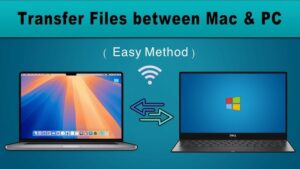
Before changing settings, decide which transfer method fits your needs.
| Situation | Recommended Method |
|---|---|
| Both computers are on the same Wi-Fi network | File Sharing over SMB |
| Regularly sharing documents | Shared cloud storage |
| Large video files or backups | External SSD or USB drive |
| One-time transfer | USB flash drive |
| Computers are far apart | Cloud storage or file transfer service |
Each option has strengths and limitations. Understanding them first can save time later.
Method 1: Share Files Over Your Local Network
If both computers are connected to the same local network, SMB (Server Message Block) is usually the fastest and most convenient solution. SMB is the file-sharing protocol supported by both Windows and macOS.
Once configured, each computer can access shared folders without copying files to another device first.
Enable File Sharing on Mac
- Open System Settings.
- Select General.
- Click Sharing.
- Turn on File Sharing.
- Click the i button beside File Sharing.
- Add the folders you want to share.
- Choose the users allowed to access those folders.
- Make sure Share files and folders using SMB is enabled.
- Enable SMB for your user account if prompted.
- Enter your Mac password.
Your Mac is now ready to accept incoming connections.
Find Your Mac’s Network Address
Windows needs to know where the shared folders are located.
On your Mac:
- Open System Settings.
- Go to Network.
- Select your active connection.
- Note the IP address, such as 192.168.1.25.
You can also see the SMB address in the File Sharing settings.
Connect from Windows
- Open File Explorer.
- Click the address bar.
- Type:
\192.168.1.25Replace the example address with your Mac’s IP address.
If Windows asks for credentials, enter the Mac username and password that has permission to access the shared folder.
After connecting, the shared folders appear like normal folders in File Explorer.
Method 2: Share Files From Windows to Mac
The process also works in reverse.
Enable Network Sharing on Windows
- Open Control Panel.
- Go to Network and Sharing Center.
- Select Change advanced sharing settings.
- Turn on:
- Network Discovery
- File and Printer Sharing
Share a Folder
- Right-click the folder.
- Choose Properties.
- Open the Sharing tab.
- Click Advanced Sharing.
- Check Share this folder.
- Set permissions.
You can allow read-only access or permit editing.
Access the Shared Folder on Mac
- Open Finder.
- Select Go.
- Choose Connect to Server.
- Enter:
smb://192.168.1.50Replace the IP address with the Windows computer’s address.
After authentication, Finder mounts the shared folder like a connected drive.
Method 3: Use Cloud Storage
Cloud services remove the need to configure network sharing.
This approach works especially well when the computers are not connected to the same network or when you frequently switch between devices.
Popular services include:
- iCloud Drive
- OneDrive
- Google Drive
- Dropbox
Simply install the desktop application on both computers, sign in using the same account, and wait for files to sync.
Advantages
- Works anywhere with internet access.
- Automatic synchronization.
- File version history on many services.
- Easy collaboration.
Limitations
- Requires internet access.
- Large transfers may take longer.
- Storage limits may apply.
For everyday documents and photos, cloud storage is often the simplest solution.
Method 4: Transfer Files with an External Drive
An external SSD or USB flash drive remains one of the fastest methods for large transfers.
However, the drive’s file system matters.
| File System | Mac | Windows | Best Use |
|---|---|---|---|
| exFAT | Read/Write | Read/Write | Best cross-platform choice |
| FAT32 | Read/Write | Read/Write | Small files only |
| NTFS | Read Only (default) | Read/Write | Windows-focused |
| APFS | Mac only | Not supported by default | Mac-only storage |
For transferring files between both operating systems, exFAT is usually the best option because it supports large files and works natively on both platforms.
Formatting the Drive
On Mac:
- Open Disk Utility.
- Select the drive.
- Click Erase.
- Choose exFAT.
- Select GUID Partition Map if appropriate.
- Erase the drive.
Formatting deletes all existing data, so back up important files first.
Method 5: Use AirDrop Alternatives
AirDrop only works between Apple devices, so it cannot send files directly to Windows.
Instead, consider alternatives such as:
- Nearby Share alternatives that support multiple platforms
- Local file transfer applications
- Browser-based transfer tools
- Wi-Fi transfer software
These tools usually create a temporary connection between the computers without requiring cloud uploads.
They can be useful when you want a quick transfer without configuring permanent network sharing.
Method 6: Use Remote Desktop or Remote Access Software
If you regularly work on both computers, remote access software can eliminate the need to move files constantly.
Many remote desktop applications include built-in file transfer features.
This works well when:
- Your computers are in different locations.
- You need occasional access to work files.
- You already use remote desktop software.
Keep in mind that transfer speeds depend on your internet connection.
Common Problems and How to Fix Them
Even when both operating systems support the same sharing protocol, a few configuration issues can prevent them from seeing each other.
Windows Cannot Find the Mac
Check the following:
- Both devices are connected to the same network.
- File Sharing is enabled on the Mac.
- SMB sharing is turned on.
- The Mac is awake and not sleeping.
- The IP address has not changed.
Using the IP address instead of the computer name often avoids network discovery issues.
Mac Cannot Connect to Windows
Verify that:
- Network Discovery is enabled.
- File Sharing is enabled.
- Windows Firewall allows file sharing.
- The shared folder has appropriate permissions.
- You entered the correct username and password.
Restarting both computers can also refresh network discovery.
Permission Denied Errors
Permission problems usually occur because the account you’re using does not have access to the shared folder.
Review:
- Folder permissions
- User account permissions
- SMB user settings
- Read versus read/write access
Grant only the permissions needed instead of allowing unrestricted access.
Slow File Transfers
Network performance depends on several factors.
Possible causes include:
- Weak Wi-Fi signal
- Older routers
- Large numbers of small files
- Antivirus software scanning every file
- Heavy network traffic
For very large transfers, connecting both computers with Gigabit Ethernet often provides much higher speeds than Wi-Fi.
Authentication Keeps Failing
Incorrect credentials are one of the most common issues.
Remember:
- Windows requires Windows account credentials.
- Mac requires the Mac user account.
- Microsoft accounts may require the full email address.
- Cached passwords can cause repeated failures.
Removing saved network credentials and reconnecting often resolves the problem.
Security Best Practices
Sharing files across a network also means protecting your data.
Follow these recommendations:
- Share only the folders you actually need.
- Require passwords for shared folders.
- Remove shared folders when they’re no longer needed.
- Keep macOS and Windows updated.
- Avoid enabling guest access unless absolutely necessary.
- Use trusted home or office networks whenever possible.
If you’re using a public Wi-Fi network, avoid enabling file sharing unless you fully understand the security risks.
Which Method Is Best?
There is no single solution that fits every situation.
If you frequently transfer files between computers on the same network, SMB file sharing offers the best balance of speed and convenience after the initial setup.
If you only need to move files occasionally, an exFAT-formatted USB drive is usually faster than configuring network sharing.
For people who work across multiple devices throughout the day, cloud storage provides the most seamless experience because files stay synchronized automatically.
Large media projects, backups, and virtual machines generally transfer much faster using an external SSD than over Wi-Fi.
Tips for Faster and More Reliable Transfers
A few habits can make file sharing smoother regardless of the method you choose.
- Keep both operating systems updated.
- Rename files using standard characters to avoid compatibility issues.
- Compress folders before transferring thousands of small files.
- Use wired Ethernet for very large transfers.
- Verify available storage before starting.
- Safely eject external drives before disconnecting them.
- Test shared folders with a small file before copying hundreds of gigabytes.
These simple practices reduce errors and shorten transfer times.
Frequently Asked Questions
Can a Mac read files from a Windows PC?
Yes. macOS can connect to Windows shared folders over SMB and can also read common storage formats such as exFAT and FAT32 without additional software.
Can Windows read a Mac-formatted drive?
Not by default if the drive uses APFS or HFS+. Windows does not include native support for these file systems. For drives that need to work on both platforms, format them as exFAT before storing files.
Why can’t my Mac see my Windows computer?
This usually happens because network discovery or file sharing is disabled, the computers are on different networks, or a firewall is blocking the connection. Confirm that both devices are using the same local network and that sharing is enabled on each system.
Is SMB better than FTP for home file sharing?
For most home users, yes. SMB integrates directly with both macOS and Windows, supports user permissions, and doesn’t require setting up a separate FTP server.
Can I transfer files without Wi-Fi?
Yes. You can use an external USB drive, connect the computers with an Ethernet cable (depending on your hardware), or use a direct USB networking solution if supported by your devices.
Final Thoughts
Knowing how to share files between Mac and Windows becomes much easier once you match the transfer method to your needs. SMB sharing is the best choice for computers on the same network, cloud storage is ideal for ongoing access across locations, and an exFAT-formatted external drive remains the fastest option for moving large amounts of data.
If you run into problems, start by checking network connectivity, sharing permissions, and user credentials before assuming there’s a compatibility issue. In most cases, file sharing problems are caused by a disabled setting or incorrect permission rather than a limitation of macOS or Windows.
Related Articles
- How to Disable Unnecessary macOS Background Processes Without Breaking Your Mac
- How to Speed Up an Old MacBook Without Replacing Hardware
- How to Free Up Storage on MacBook Without Deleting Important Files
- Why Is My MacBook Running Slow After macOS Update?
If you think there’s been a mistake here, please do let us know by commenting on this post or Contact Us. And a member of our Content Integrity Team will review this decision with you.